Invention Design
Digital Fear Therapy
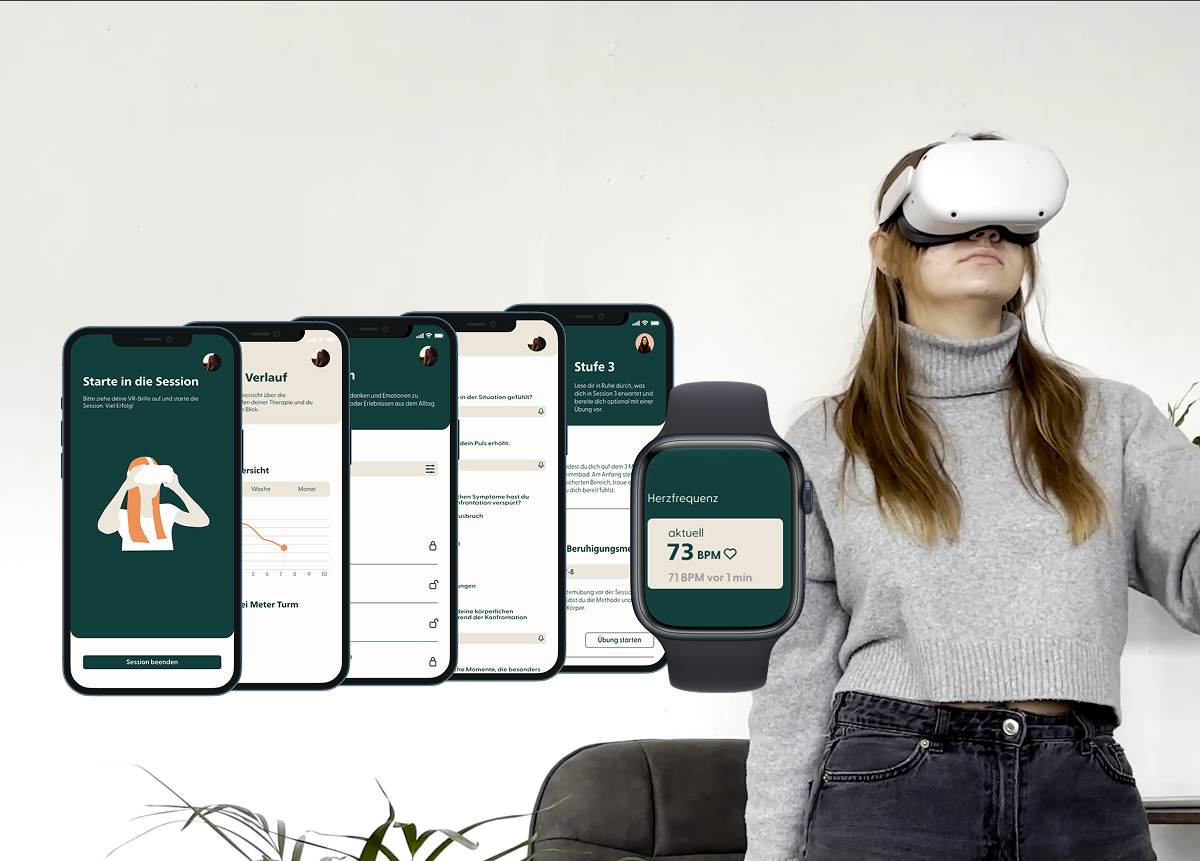
Digital Fear Therapy ("Digitale Angsttherapie") pairs an app with VR to help people face fears and phobias. The goal is to make exposure therapy feel safer and more approachable, and to keep therapists and patients better connected between sessions.
Emily Kühl
Nina Dettmers
Olivia Regattieri
Responsibilities
Ideation
- Research
- Crazy 8
Concept
- Interaction
Design
- Editing
- 3D Prototype
Create a digital space where people can safely confront their fears, while keeping the guided support and collaboration of a therapist.
Information from those affected
Symptoms
Fainting, cramps, nail-biting, nervousness, tension, screaming, crying
Methods
Take a deep breath, meditation techniques, distraction
Origin
Fear can be traced back to experiences in childhood
Impact
Significant restriction → Doing without things in everyday life
Wants
Understanding of phobias, greater awareness and gradual exposure.
Challenges
Beyond the fear itself come social hurdles: therapy places are scarce, and many don't consider their fear serious enough to go looking for help.
Concept
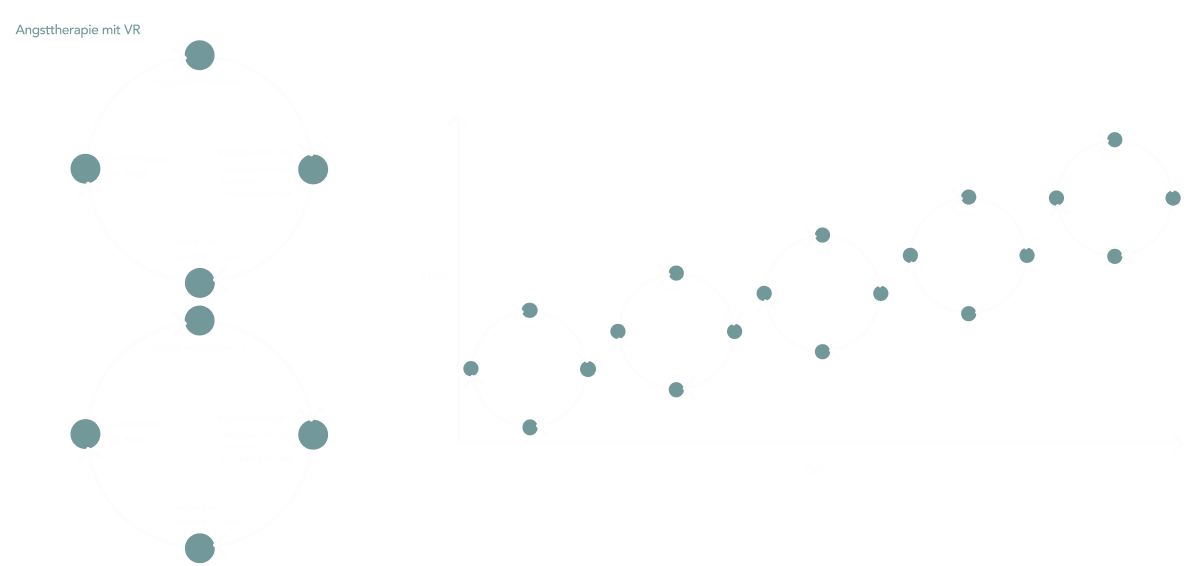
The Anxiety Cycle
The concept is structured around the anxiety cycle, describing the interplay between thoughts, feelings, physical reactions, and behaviour. Using ideation methods such as Crazy 8, we translated these principles into concrete features and usage scenarios.
The Flow
The therapy flow follows a clear process: initial meeting → preparation sheet → strategy discussion → VR therapy session. The app guides users step by step, making the therapy process comprehensible and navigable.
Features
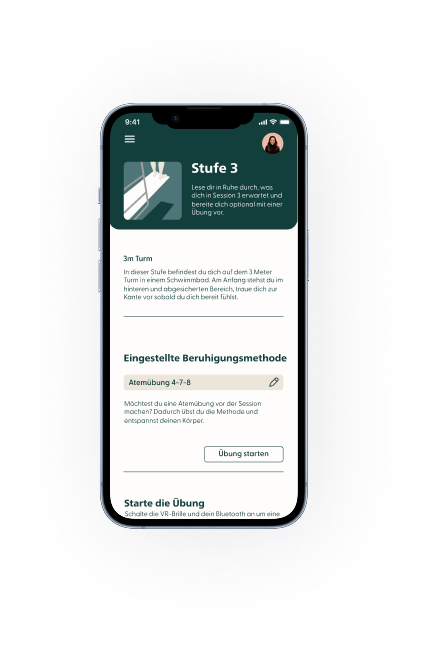
Get fully prepared for your next virtual meeting and launch your VR session right from the app.
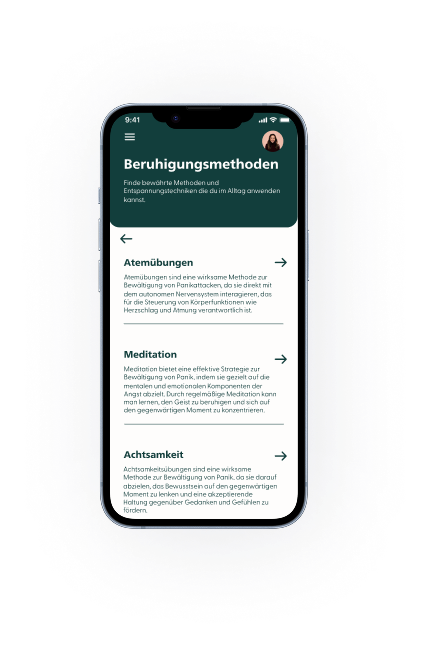
Discover effective breathing, meditation, and mindfulness exercises to help you manage acute anxiety on your own at any time.
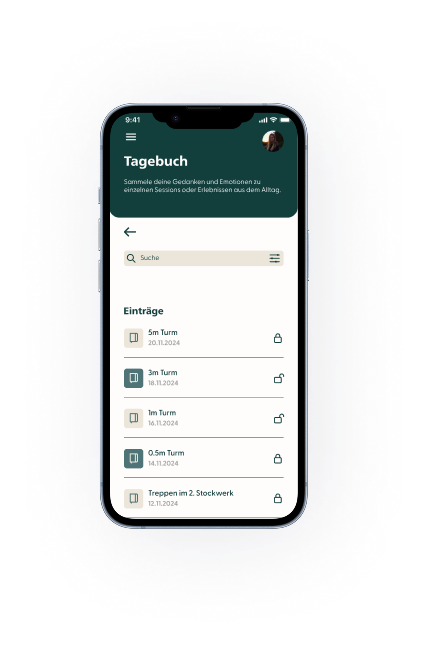
Record your progress, emotions, and insights after each session to track your personal growth.
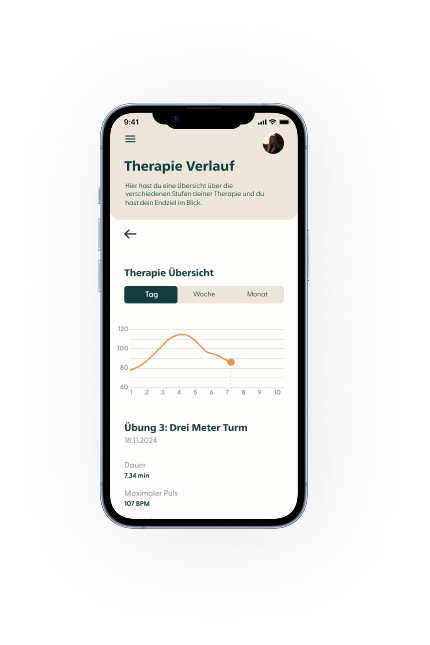
Keep track of your therapy progress and analyze your progress and vital signs from previous exercises.
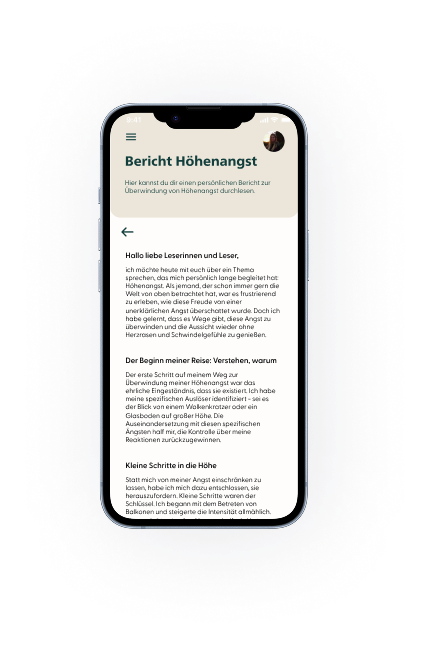
Use informative articles and expert knowledge to better understand and manage the mechanisms of your anxiety.
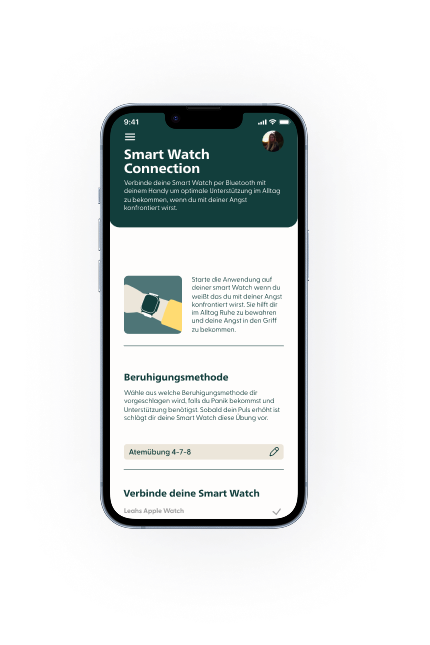
Connect your smartwatch to monitor your heart rate in real time and receive guidance when you're feeling stressed.
Technical Implementation
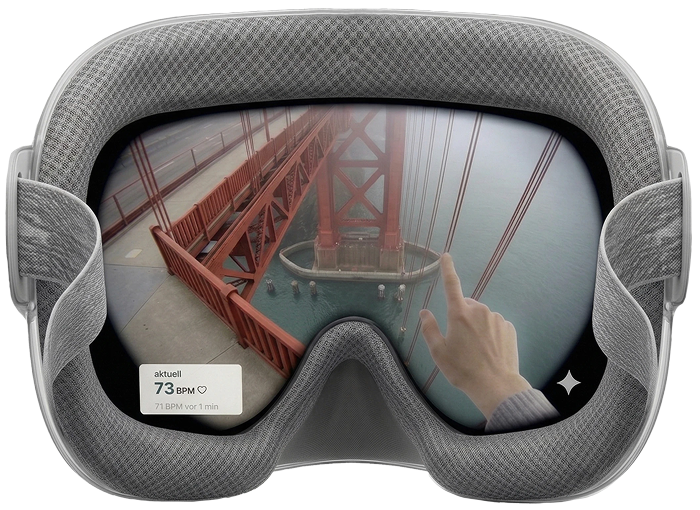
VR Prototype
For the implementation, we developed a VR prototype using a Meta headset combined with 3D models built in Blender. The goal was to create an immersive but controllable environment in which users can confront their fears step by step and adjust the intensity individually.
The ability to exit the experience at any time reinforces the sense of safety and control, a critical factor in effective exposure therapy.
Outlook
There's a lot of room to grow. Body signals like heart rate or stress could adjust the VR intensity in real time, so each session fits the person in front of you. More lifelike scenarios would deepen the effect, and the same idea could stretch to many other fears and therapy settings.
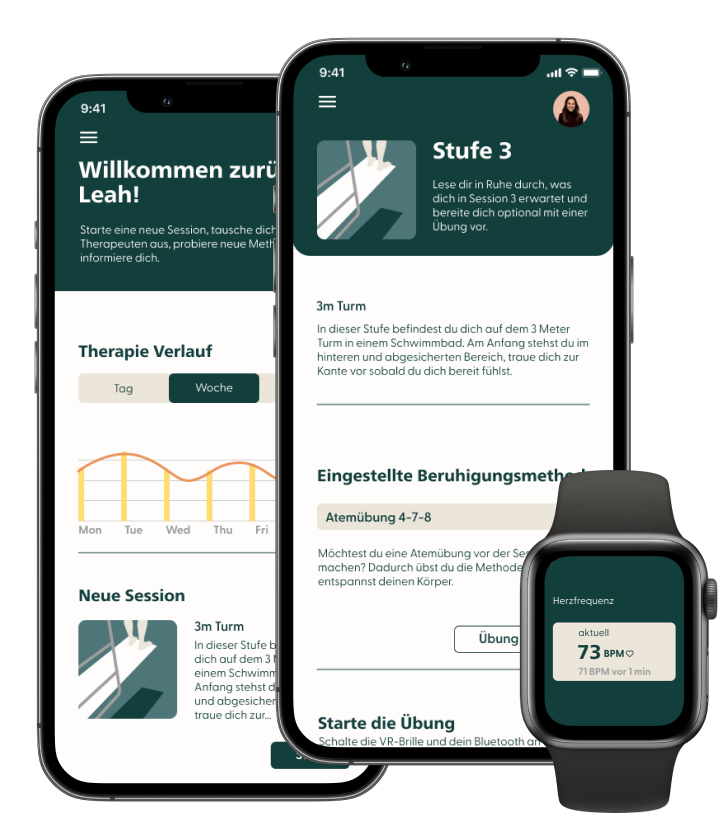
Body Data Integration
Heart rate and stress signals captured in real time to personalise session intensity.
Realistic Scenarios
More immersive 3D environments that mirror real-world situations and triggers.
Scalable Across Fears
The system can be extended to support a broad range of phobias and anxiety types.